
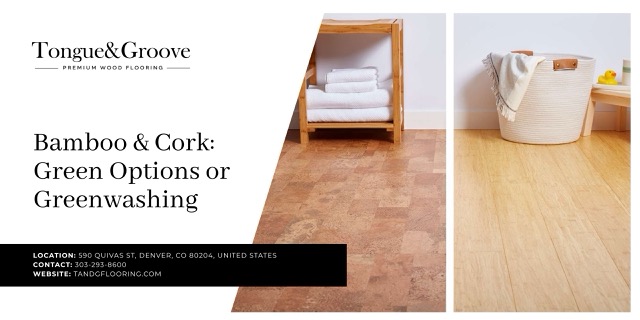
When you think eco-friendly, bamboo and cork are probably the first flooring options that come to mind. Often marketed as renewable, sustainable, and environmentally friendly, they’ve become a go-to for eco-conscious buyers. But are bamboo and cork truly green, or just clever marketing?
Homeowners should be able to make decisions based on both sustainability and performance with guidance from flooring experts. Being misled by big corporations should never be an option. Follow along as we unpack the truth behind bamboo and cork floors.
Table of Contents
ToggleBamboo Flooring: Fastest Growing Grass with Potential Caveats
Bamboo is a grass, not a traditional hardwood flooring type. Because of that, it can grow pretty quickly (sometimes up to 8 inches per day)! Its rapid growth makes it a renewable resource, which appeals to eco-conscious homeowners.
Bamboo flooring has its advantages. These include:
- Highly renewable and fast growing
- Durable and versatile for busy homes
- Affordable alternative to traditional hardwood
While magnificent in many ways, bamboo is far from perfect. Consider the following:
- Some bamboo plantations clear forests to expand, offsetting the sustainability benefit
- Strand-woven bamboo is a composite product, meaning it isn’t entirely natural
- Bamboo will crack in dry climates like Denver without proper acclimation
In summary, bamboo can be a green flooring option if it’s sourced responsibly and matched to the environment in which it’s installed.
Cork Flooring: Renewable, Dense and Durable
Cork originates from the bark of cork oak trees so it can be harvested without cutting down the tree. Because of this, cork is a naturally renewable material that works well for flooring applications.
Cork flooring is still making waves in modern homes. Here’s why:
- Materials harvested every 9-12 years without harming the tree
- Soft, warm and insulating underfoot
- Durable and moisture-resistant
However, cork flooring still has its flaws. Keep this mind when you’re shopping around:
- Industrial-scale harvesting can reduce sustainability benefits
- Availability is limited depending on the region
- Quality can vary as some manufactured cork products include chemical adhesives
Generally, cork is a sustainable flooring option, eco-friendly choice as long as it’s sourced and finished responsibly.
Avoid Greenwashing
Some companies will say whatever they want to get a sale. Not all marketing claims are accurate. In fact, some products are labelled eco-friendly without meeting sustainability standards.
How do you find out what if somewhere is telling the truth? Watch out for the following red flags:
- Lack of FSC or FloorScore certification
- Use of chemical adhesives or toxic finishes
- Mislabeling composite or engineered products as fully natural
What is a sustainable flooring product? It’s one that combines responsible sourcing, minimal environmental impact and durability.
Shop for Sustainable Flooring Options Today
Bamboo and cork can be genuinely sustainable flooring options, but homeowners should be careful to avoid greenwashing. Truly sustainable flooring combines responsible sourcing, long-lasting performance, and materials that make sense for your climate. At Tongue & Groove, our Denver flooring retail showroom team keeps it simple and tells you the truth. When you visit, you’ll find sustainably made, responsibly sourced flooring options you can feel good about choosing.
Looking for eco-conscious, beautiful wood flooring built to last? Visit us or contact us to book a consultation!