
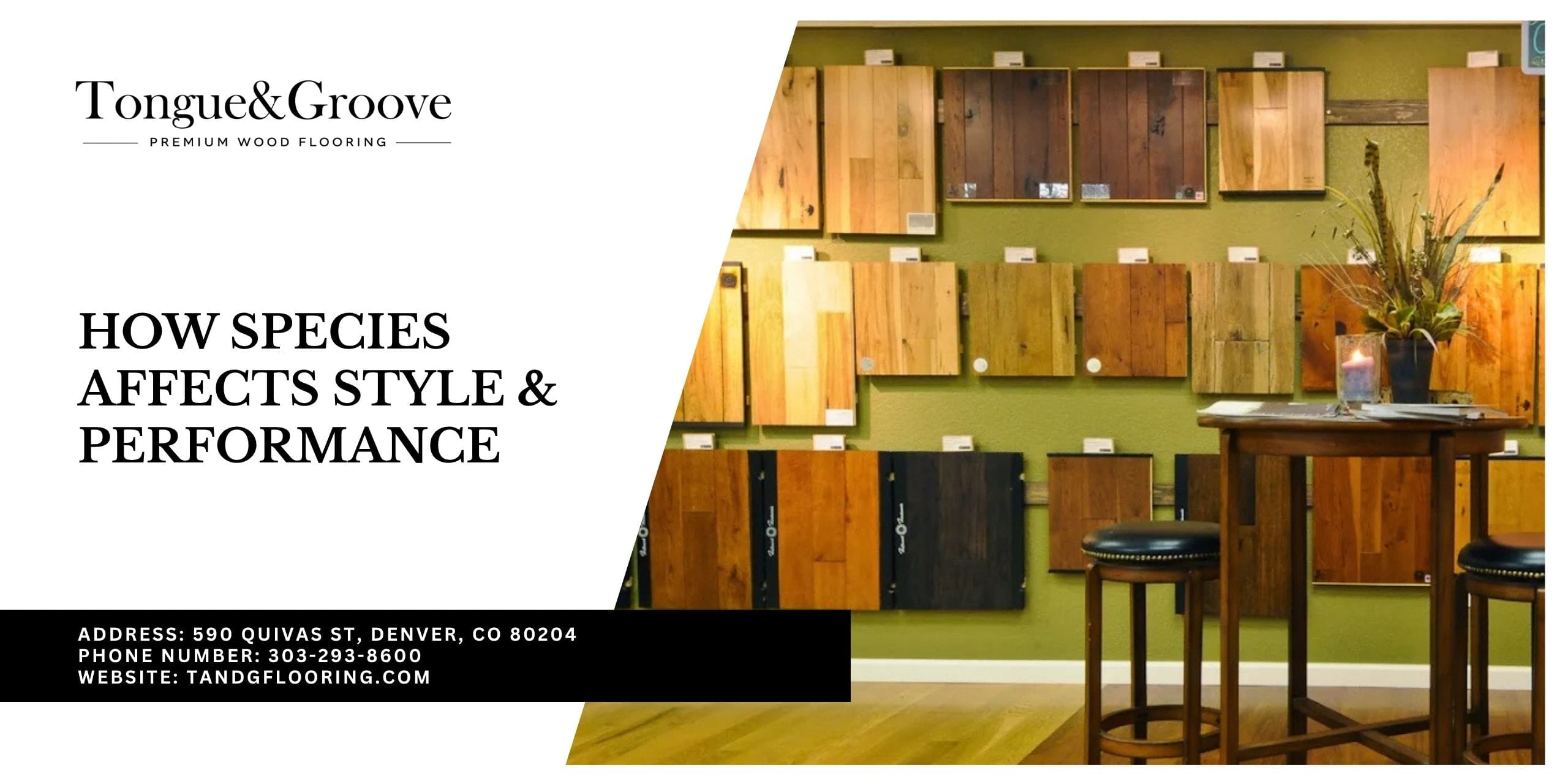
Step into any Denver hardwood flooring showroom and you’ll notice the many color and grain patterns. While these catch your attention, they only represent a fraction of what species selection determines. The species you choose determines how well your floor stands up to daily wear, responds to Colorado’s dry climate and ages over decades in your home.
At Tongue & Groove, we help homeowners choose the right species so their floors look amazing long after installation day. Through our experience installing premium hardwood floors throughout Denver, we’ve learned educated species choices lead to decades of satisfaction, while choosing based on looks alone leads to instant regret.
Table of Contents
ToggleHardness: Understanding Real World Durability
The Janka hardness test measures how much force is required to embed a steel ball into wood (dent resistance). Scores range from soft species like pine (around 690) to exceptionally hard species like Brazilian walnut (over 3,600). Most North American hardwood floors fall between 1,000 and 1,500.
Differences in hardness exist, but they aren’t as dramatic as homeowners might think if they maintain their floors. For example, a softer species like walnut (1,010) doesn’t mean your floors will dent if you use furniture pads and keep pet claws short. Meanwhile, an extremely hard species like hickory (1,820) isn’t indestructible if you don’t neglect basic care.
Hardness is more important for specific situations, including:
- Large dogs with untrimmed nails
- Frequently moved heavy furniture
- Commercial applications with extreme traffic
These don’t apply to everyone. For your home, choose a species that fits your lifestyle, rather than focusing on Janka scores alone.
Stability: How Wood Responds to Climate Changes
Dimensional stability determines how much wood expands and contracts with humidity fluctuations, which are super important in Colorado’s dry climate. Wood is hygroscopic, which means it gains and loses moisture based on surrounding conditions. Movement occurs along the growth rings (side to side across the plank, not end to end).
Some species have better dimensional stability than others. Quarter and rift sawn cuts have better stability because dimensional changes occur in board thickness rather than width. In Denver, humidity can swing from 15% in winter to 40% in summer, dimensional stability makes a difference, and it’s exactly why Denver flooring specialists pay close attention to species selection, cut, and acclimation before installation.
How do you reduce stability concerns? Pre-installation moisture content testing and maintaining consistent home humidity levels are a good start. Choosing a naturally stable species and opting for engineered hardwood over solid hardwood reduces the chance of seasonal gapping.
What species is best for your home’s conditions? During your consultation in our Denver showroom, we discuss your home’s climate control, sun exposure and lifestyle factors. We guide you toward species that perform in your home.
Photosensitivity: How Color Changes Over Time
Wood color changes with light exposure. This isn’t damage or defect, it’s part of the wood aging. Understanding photosensitivity prevents disappointment when you move furniture or remove area rugs and discover color differences.
For example, walnut starts out rich and dark, but becomes lighter with sun exposure over the years. Meanwhile, exotic species darken in sunlit areas. White oak generally maintains its color, but warms slightly and cherry develops a rich patina that some homeowners love, but others aren’t a fan of.
When placing your furniture and rugs, consider photosensitivity. Expect visible color differences when you move them. Our advice? Rotate rugs regularly to give the entire surface periodic sun exposure.
Stain Acceptance and Species-Specific Considerations
When you go with site-finished wood flooring with custom stain colors, species selection matters. For example, oak species readily accept stains with even, predictable results. Walnut and hickory also stain well, but natural color variations often show through.
Maple and pine don’t accept stains as well. They don’t absorb evenly, which can give you blotchy results that conditioning cannot correct. This doesn’t make them an inferior species, but it does mean they’re better suited for natural or prefinished applications where stain acceptance doesn’t matter.
Matching Species to Lifestyle
While a species could be perfect for one home, they might not be for another. At Tongue & Groove, we help you prioritize the species that make sense for your family. Whether you’re an active family with large dogs or a design-focused household, we have a wood species for you.
Ready to choose a wood species that matches your lifestyle and aesthetic? Visit our Denver showroom or contact us to book a consultation today!