
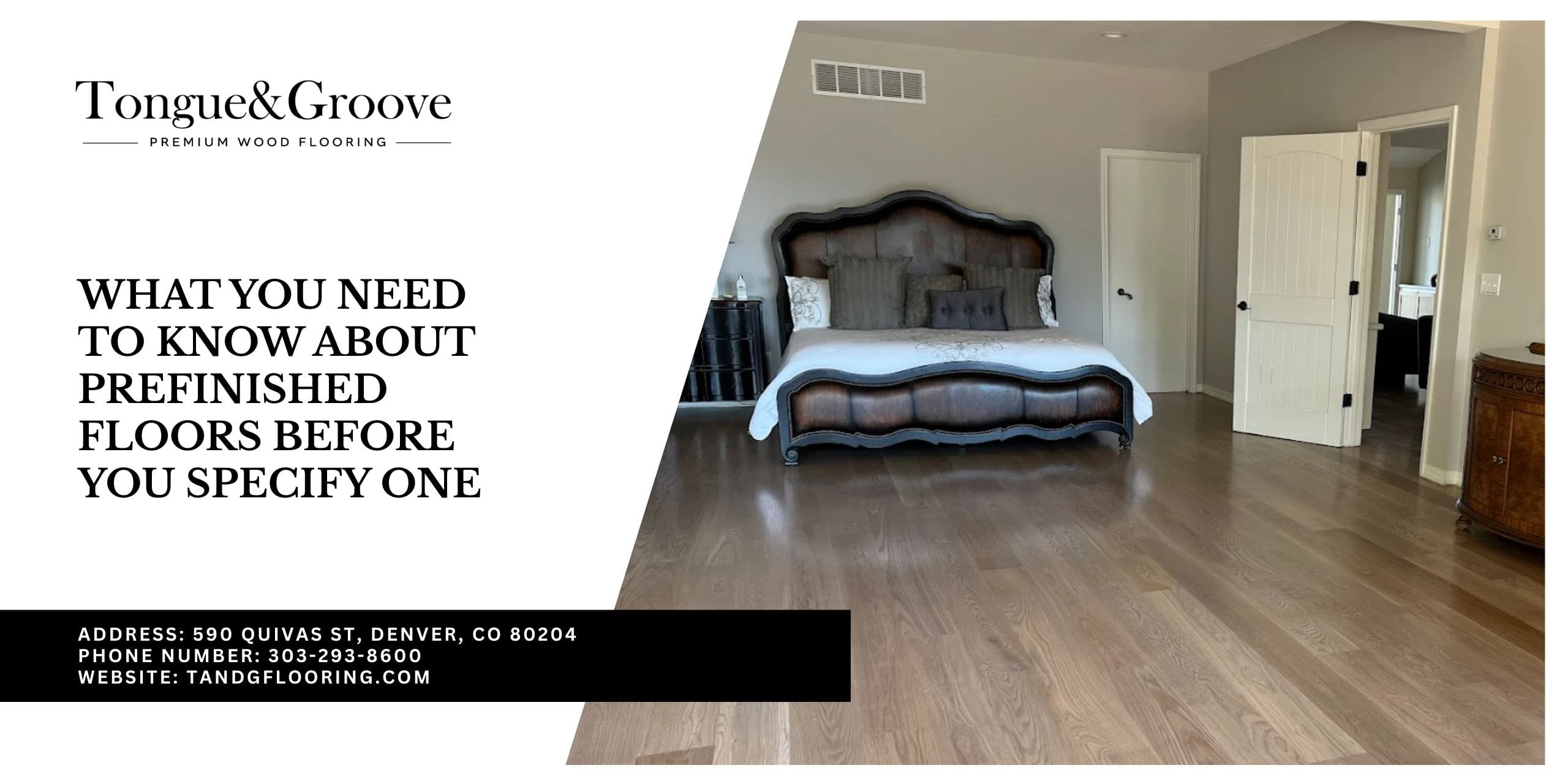
Prefinished flooring is fairly self-explanatory. It arrives from the factory completely finished and ready to install, which means faster project timelines, less on-site mess and seeing your floor color before installation begins. In some instances, this is great. For example, prefinished hardwood products make sense for occupied homes, tight schedules or when dust control matters.
However, they also limit your long-term options. Our Denver-based wood flooring professionals install both prefinished and site-finished hardwood and are one of the few Denver companies to do so. Our nearly two decades of experience will help you understand these constraints to prevent expensive disappointments later.
Table of Contents
ToggleThe Resanding Reality: Why most Prefinished Floors Can’t Be Refinished
The biggest and most damaging misconception about prefinished flooring is it can’t have refinishing services in Denver like its site-finished counterpart. While this may seem accurate on the surface, it’s much more complicated.
Prefinished planks have beveled edges that create slight grooves between the boards. This can make resanding challenging. The bevels must be removed through aggressive sanding to create a flat surface for refinishing. This involves cutting through the wear layer above the tongue.
Exposing the tongue compromises the floor’s structural integrity and can cause the joints to fail. Even without fully exposing the tongue, removing bevels leaves little thickness for future maintenance. Such hardwood products generally feature extremely hard aluminum oxide finishes that require aggressive sanding, reducing the wear layer.
In short, most prefinished floors cannot be resanded. While a single light screen and recoat may be possible, full resanding with stain color changes is rarely viable.
Is long-term flexibility important to you? Let our Denver team walk you through the differences between prefinished and site-finished hardwood in our showroom. We’ll show you wear layer measurements and explain maintenance expectations for each approach.
The Discontinued Product Problem
Flooring manufacturers constantly change their product lines. Colors, finishes and textures today might not exist in five or ten years. This creates challenges for homes with prefinished floors who need repairs or wish to extend their floors later.
When your product gets discontinued, it’s nearly impossible to find an exact match. Even if you find remaining inventory, there may still be noticeable color variations. Finish formulations change, wood sources vary and manufacturing processes change so the new product will be noticeably different beside aged flooring.
Site-finished wood floors don’t have this issue. When you need repairs or additions, the entire area is sanded and refinished together. The original floor and addition become one seamless surface without demarcation lines or color mismatches. Such flexibility offers enormous value over decades of owning your home.
Why Prefinished Samples Hide the Truth
Prefinished samples displayed in showrooms look great. While beautiful, they don’t always show you what you’re going to receive.
Samples chosen by manufacturers show the cleanest boards or most dramatic character pieces they’re marketing. Real production runs vary and have boards you’d never see in a showroom display.
Before committing to a large prefinished order, buy a single box and lay out every board. It will show you the color range, character variation and grade consistency you’re actually getting. Sometimes, the differences are minor, but other times, you’ll change your mind completely.
Considering prefinished wood floors? Schedule a consultation in our Denver showroom. We can discuss product sampling strategies and help you know what to expect before you buy your flooring.
Understanding Prefinished Grade Confusion
The names of prefinished flooring grades can vary. Most marketing departments create subjective labels like: Premium, Elite, Country, Pioneer and Rustic, but they don’t mean the same thing across companies. One’s brand’s “Premium” may be Select grade with minimal character. While another company’s version might be closer to #1 Common with moderate variation.
Always ask suppliers what their grading terminology actually means. For example, ask “Is your Premium equivalent to Select or closer to #1 Common?” This opens up a dialogue for honest communication and gives you a reference point to understand what you’re purchasing.
Additionally, mixed-grade prefinished products are common. Individual boards within the same product can span across traditional grade levels, creating more variation than straight-grade unfinished products.
When Prefinished Makes Sense
Prefinished products have their limitations, but you shouldn’t avoid them entirely. They’re perfect for tight project timelines, occupied homes or when a homeowner wants a specific color. Meanwhile, site-finished wood floors offer long-term flexibility, custom color control and the ability to refinish for decades. At Tongue & Groove, we help you set realistic expectations so you can make informed decisions.
Ready to decide if prefinished wood is right for you? Contact us or visit our Denver showroom today!