
Wood grades can be confusing. Select, #1 Common, #2 Common, Premium, Rustic, these terms sound like quality rankings, but this is far from the truth. “Select” means better and “Common,” means inferior, right? However, wood grades don’t measure quality, durability or value. Instead, they describe aesthetic character, the amount of color variation and how many knots appear in your floor.
At our Denver flooring dealership, we help homeowners choose the grade they’re after and educate them on what these terms mean. After nearly two decades of wood flooring installations across Denver, we’ve come to understand that grades make or break a wood floor. Our goal is to help homeowners confidently choose floors that match their design vision.
Table of Contents
ToggleUnfinished Wood Grades: Standardized Terminology
For unfinished hardwood floors like oak, hickory, walnut and cherry, industry grading standards provide clear definitions. Here’s a breakdown:
- Select Grade: This type of wood is the cleanest option with consistent color, minimal variations and no knots. Its uniformity is best for contemporary, gallery-like spaces.
- #1 Common Grade: Known for its warmth and subtle character, you’ll notice some color variations, small knots and minor mineral streaks. The grade is sophisticated and adds visual interest, while maintaining refined elegance for luxury homes.
- #2 Common: Showcasing bolder color variation with larger knots and more mineral streaking, this is the way to go for a casual, lived-in aesthetic if you’re going for a rustic or farmhouse-inspired design.
- #3 Common: As the lowest standard grade, it’s the best way to get full rustic character as there’s substantial variation and large knots throughout the wood.
Don’t think of one grade as being better than another. The only difference is in the design goals. For example, a #2 common white oak floor isn’t lower quality than Select. In reality, it just looks different because of the natural character on display.
Prefinished Wood Grades: Subjective Marketing Terms
When it comes to prefinished hardwood, the lines start to blur. That’s because they don’t use standardized terminology. Instead, marketing departments create their own labels, including: Premium, Elite, Country, Pioneer, Rustic and Character. There’s no industry-wide agreement on what these terms mean. Let us explain.
One manufacturer’s “Premium” grade might resemble Select with minimal character. Meanwhile another version’s may be closer to #1 Common with moderate character. Another store might use “Premium” to describe their cleanest offering within a naturally varied species. What does all this mean?
This marketing-driven terminology is everywhere! It’s rare to find Select grade prefinished products because most manufacturers blend grades to maximize character-driven aesthetics that appeal to current design trends. Mixed-grade products where individual boards span multiple traditional grade levels are common.
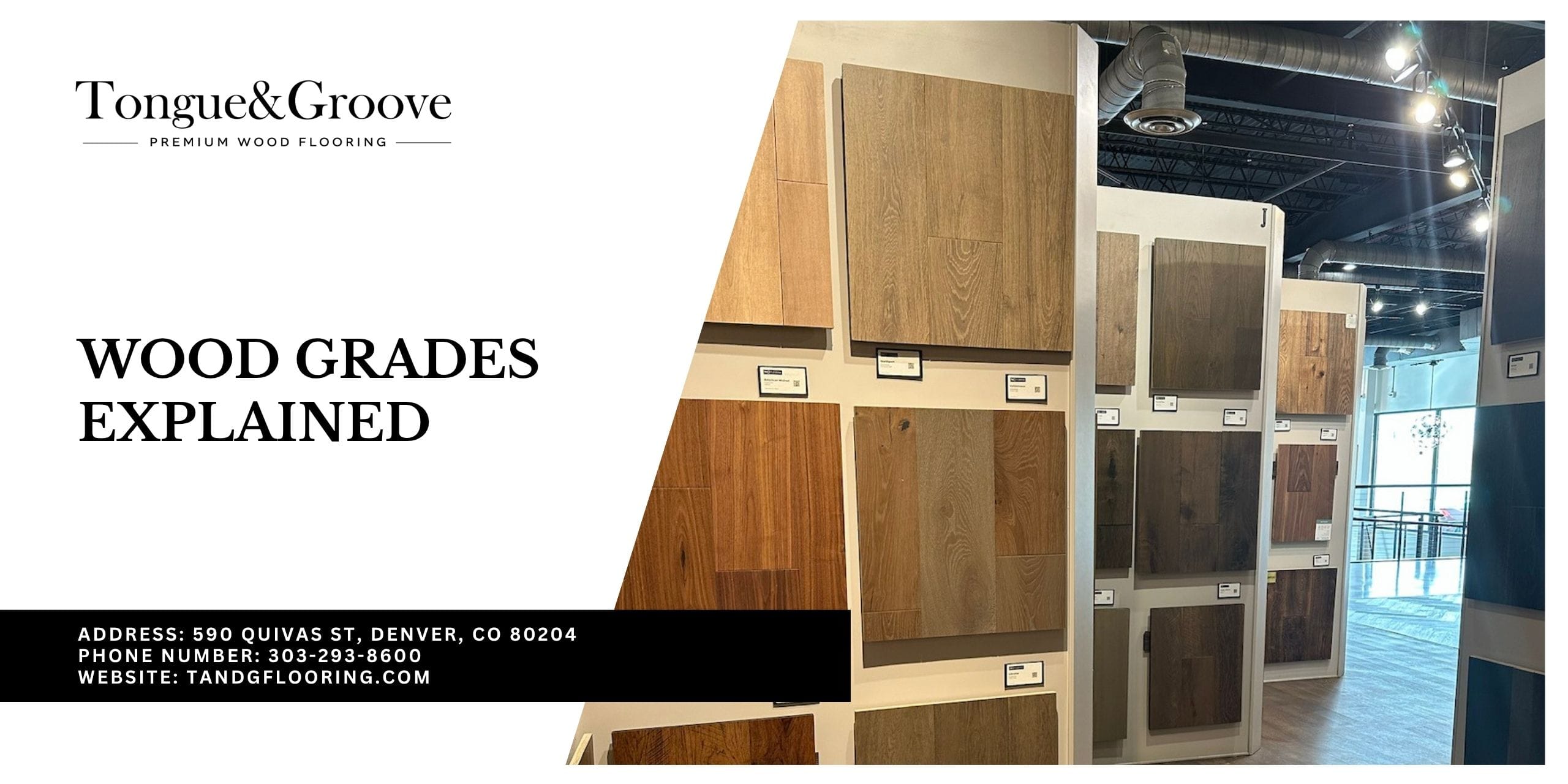
Navigating prefinished products options? In our Denver showroom, you can see actual product samples and understand what each manufacturer’s grading terminology delivers. We explain how their system translates to traditional unfinished standards so you can make an informed decision.
How to Decode Prefinished Grading
When shopping for prefinished hardwood, ask your designer to tier their grading terminology to unfinished standards. Ask, “Is your Premium Grade equivalent to Select or closer to #1 Common?” It’s the best way to get a reference point.
One of the biggest pros of prefinished hardwood is faster installation with less disruption, plus a factory-cured finish that’s often more consistent and wear-resistant.
However, your best bet is to buy a single box of your desired product before placing a large order. Floor samples in showrooms don’t represent the full colour variation and character you’ll see when the floors are installed. Samples showcase the cleanest or most dramatic boards, not the typical variation across the entire floor.
Lay out a complete box in your space. See if you like the variation, the knot size and frequency, and whether the colour range matches your vision. This simple step prevents expensive disappointment following installation when you discover the product looks dramatically different from the sample.
Matching Grade to Design Vision
When you choose grade, it should match your design aesthetic and lifestyle preferences. Here’s an overview of what grades fit where:
- Contemporary, Minimalist Spaces: Choose Select grades as the uniformity supports the refined atmosphere.
- Traditional and Transitional Designs: Use #1 Common as it balances character and sophistication.
- Casual, Rustic Interiors: Look into #2 and #3 Common grades as they vary more when it comes to dimension, color and texture. They’re also practical for homes with pets and children.
Besides your style, think about how your floors will look next to other wood elements in your space. Perfect matching isn’t mandatory. However, complementary tones and characters create cohesion. For example, if you have cabinetry with a clean trim, a #2 Common floor might feel disconnected. Meanwhile, reclaimed beams and rustic accents can clash with Select grade flooring.
Making Informed Grade Decisions
Wood grades describe aesthetics, not quality. That can have a huge impact on your choice. At Tongue & Groove, we’ll help you ask, “Which grade delivers the visual character I want in my space?” instead of “Which grade is best?” It will help you make a confident decision about your wood flooring design instead of making assumptions.
Ready to decode wood grades and choose with confidence? Visit our Denver showroom or contact us today to book an appointment!